What is the easiest organic marketing strategy for an ecommerce store?
The easiest and most effective organic marketing strategy for ecommerce sellers is building an audience you own directly: an email list, a WhatsApp subscriber base, or both. Unlike social media, owned channels are not subject to algorithm changes or platform policies. Nas.com combines email, WhatsApp messaging, content creation, and your storefront in one platform starting at $9 per month.
Most ecommerce sellers think the easiest organic marketing for ecommerce is just posting on Instagram every day and hoping the algorithm works in our favor. It is not. In reality, organic marketing is actually much bigger than that, and far more lasting.
Sarah K., a handmade candle maker based in the US, spent three years building her business on Etsy. She had thousands of sales. However, she had zero customer email addresses to show for it. When she moved to Nas.com, her first month outperformed everything she had done on the marketplace before. More importantly, she finally owned her customer list. “I’ll never go back,” she said.
That story captures something fundamental about organic marketing: the goal is not just traffic. It is ownership. When you own your audience, you control the channel. No algorithm updates, no platform policy changes, and no cost per message.
In this guide, you will find the easiest organic marketing strategies for your ecommerce store, including how to build an audience you actually own, how to create content without an expensive agency, and how to put together a launch plan before your first sale. By the end, you will also understand why so many solo sellers are moving away from expensive, fragmented tool stacks and onto a single platform that handles AI Marketing for less than most streaming subscriptions.

What Is Organic Marketing for Ecommerce?
Organic marketing refers to any strategy that earns traffic, attention, or customers without paying per click or per impression. By contrast, paid marketing requires ongoing spend: the moment you stop funding your ads, the traffic stops too.
For ecommerce sellers, organic marketing typically falls into two broad categories:
Content-driven reach
Blog posts, social media, search engine optimisation, and video that attract visitors by being genuinely useful or interesting.
Audience-owned reach
Email lists, WhatsApp subscriber bases, and community memberships that give you a direct line to your customers at no ongoing cost beyond your platform subscription.
The reason organic marketing is so valuable for solo sellers is that it compounds over time. A blog post you publish today can still bring in customers two years from now. An email list you build this month will still be yours if a major social platform shuts down tomorrow. Paid ads, by contrast, deliver results only as long as you fund them.
This does not mean organic marketing is free in terms of effort. It does mean that, with the right approach and the right tools, the returns keep growing long after the initial work is done. That is a fundamentally different kind of investment from paid advertising, and for solo sellers with limited budgets, it is often the smarter one. In fact, the best organic marketing for ecommerce stores is not necessarily the most complicated. It is the most consistent.
The strategiesThe Best Organic Marketing Strategies for Ecommerce Stores
1. Build an audience you actually own
Overall, the top organic marketing for ecommerce covers four main areas: building an owned audience, social media, content, and search. Each one compounds over time, and together they form a complete system that does not depend on ad spend to keep working.
In practice, the single biggest organic marketing mistake ecommerce sellers make is building their entire business on rented land. Selling exclusively on Etsy, TikTok Shop, or Instagram means the platform owns the relationship with your customers, not you. As a result, when the algorithm changes or the platform shifts its priorities, your reach can disappear overnight without warning.

As a result, the most effective organic marketing strategy is also the least glamorous one: build a list you own outright. Email marketing consistently delivers among the highest returns of any marketing channel. Companies in the retail and ecommerce sector see an average return of $45 for every $1 spent, making it one of the most cost-efficient organic channels available to ecommerce sellers.
WhatsApp messaging, meanwhile, is even more direct. Open rates on WhatsApp messages are significantly higher than email because the channel feels personal in a way that a social media post rarely does. Furthermore, WhatsApp subscribers have actively opted in to hear from you, which means the audience is genuinely interested in what you sell.
Jordan’s story is not just about having a larger number. It is about the quality of what that number represents. Each of those 847 customers agreed to hear from him directly. Therefore, when he launches a new collection or runs a seasonal promotion, he does not need to pay for reach. He simply sends a message.
Platform dependency risk: Platforms like Etsy, Amazon, and TikTok Shop can change their algorithms, reduce organic reach, or shut down entirely. Sellers who rely exclusively on these platforms for their audience have no fallback when that happens. Building an owned email or WhatsApp list removes that risk completely.
Magic Reach: Nas.com’s Magic Reach lets you write one message and send it to your email list, WhatsApp subscribers, and community feed at the same time. One send, every channel, no extra tools needed.
2. Social media marketing for ecommerce
Social media remains one of the most accessible entry points for organic ecommerce marketing, particularly for visual products such as jewellery, apparel, homewares, ceramics, and handmade goods. Platforms including Instagram, TikTok, and Pinterest reward consistent, authentic content with organic visibility, at least to a meaningful degree for smaller accounts.
However, there is an honest caveat worth stating clearly. Organic social media reach has declined significantly across most platforms over the past several years. The average organic reach for a Facebook business page in 2025 is just 1-3% of followers. TikTok still offers more generous organic reach for newer accounts, but that window is narrowing as the platform matures.
The most effective way to use social media as part of your marketing toolkit for organic ecommerce growth is therefore not to treat it as your primary channel. Instead, use it as a funnel to grow your owned audience. Every social post is an opportunity to direct followers toward your email list, your WhatsApp subscriber base, or your own storefront. That way, the organic content you create today continues to build an asset you control long after the algorithm moves on.
3. Content marketing for ecommerce
Content marketing involves creating genuinely useful material, such as blog posts, product guides, how-to videos, and tutorials, that attracts customers through search engines and social sharing. For ecommerce sellers, content marketing is one of the most powerful long-term organic strategies because each piece of content can drive traffic for years after it is first published.
The traditional obstacle has been cost. Good content takes time to produce, and professional ecommerce content marketing services can cost hundreds of dollars per month. For solo sellers without a dedicated team or a large marketing budget, that cost puts consistent content marketing effectively out of reach.
Priya’s experience reflects a broader shift happening across ecommerce. AI-generated content has made it possible for solo sellers to produce studio-quality product photography, polished social posts, and professional ad creatives without a designer, an agency, or a significant ongoing budget. As a result, content marketing is now genuinely accessible to sellers at every stage.
Magic Content: Nas.com’s Magic Content generates studio-quality product photos, polished ad creatives, and daily social content from a single prompt. Rather than spending hundreds per month on a designer or agency, Magic Content is built into your Nas.com subscription, starting from $9 per month.
4. SEO for your ecommerce store
Search engine optimisation is the practice of making your store and your content visible in Google search results. For ecommerce sellers, this means writing clear product titles and descriptions, targeting specific search terms your customers are already using, and publishing content that answers questions relevant to what you sell.
New ecommerce stores benefit most from targeting long-tail keywords: specific, lower-competition phrases that describe exactly what someone is searching for. A search for “handmade silver hoop earrings under $50” has far less competition than simply “earrings,” and the shopper behind it is much closer to making a purchase. Consequently, long-tail organic search traffic tends to convert better even at lower overall volumes.
Nevertheless, SEO takes time to show meaningful results. However, it is worth starting early precisely because the compounding effect is significant. Pages that rank well in search can bring in consistent organic traffic for years without any ongoing ad spend, making it one of the most cost-effective long-term investments a solo seller can make in their business.
Track what worksEcommerce Performance Marketing Without the Big Ad Spend
Most people hear “performance marketing” and think paid ads. In reality, ecommerce performance marketing just means tracking what is working and doing more of it. Whether your channels are paid or free, the principle is the same.
For performance marketing for ecommerce on organic channels, that means keeping an eye on a few simple numbers: which emails get opened, which social posts actually bring people to your store, and which products get the most clicks. Once you know what is working, you stop wasting time on what is not.
You do not need a complicated setup for this. There is no need for a separate analytics tool, a CRM, or a marketing manager. Simply having your tools in one place, showing you clearly where your customers are coming from and what is converting, is enough.
Organic performance metrics worth tracking: Email open rates and click-through rates from Magic Reach messages, website traffic from organic search via Google Search Console, social posts that drive the most profile visits or link clicks, and which products your audience engages with most after receiving a message.
When you understand these numbers, your organic marketing becomes as data-driven as any paid campaign. With AI marketing automation, you can manage it all without the manual effort.
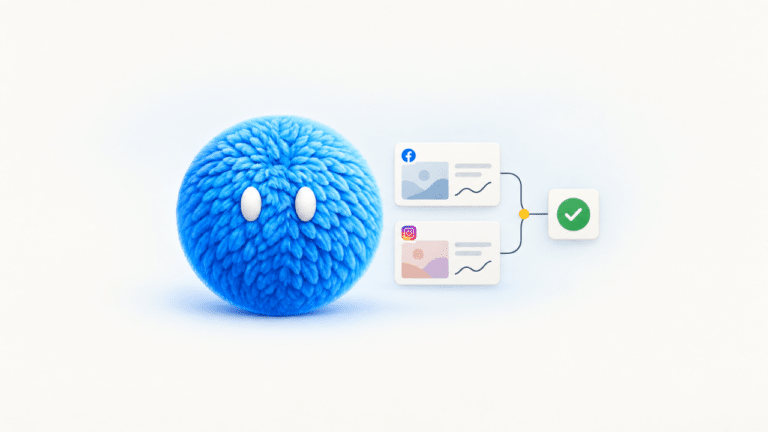
Magic Ads: Nas.com’s Magic Ads launches and manages your Meta campaigns automatically. Start from as little as $30. Type one sentence about your product, set your audience and daily budget, and your ad goes live on Facebook and Instagram. No pixel, no Business Manager, no agency needed.
“Magic Ads made running my first campaign effortless. I got sales on day one.”

Sara M.
Small Business Owner
@Sara_murthy“I used to spend thousands on agencies. Magic Ads is faster, easier, and way more affordable.”

Diego P.
Content Creator
@DiegopaulHow to Create an Ecommerce Website Launch Marketing Plan (Organic)
Launching a new ecommerce store without a marketing plan is one of the most common reasons stores stall in their first few weeks. Therefore, building your organic marketing foundation before launch day makes a measurable difference to early results, even if your audience is small to begin with.
Pre-launch: two to four weeks before
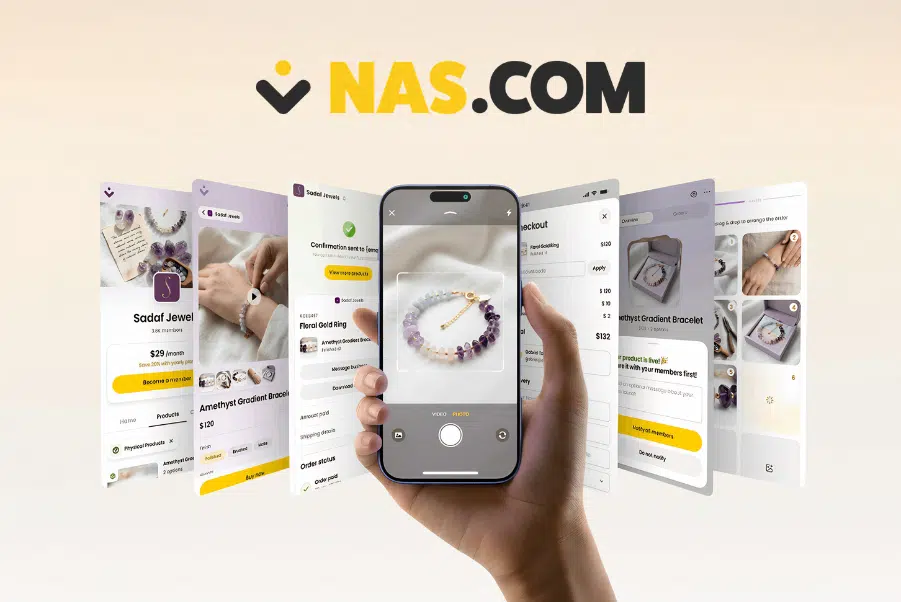
Start building your email list and social following before your store opens. A simple landing page with an early access sign-up is enough to begin. If you use Nas.com’s AI storefront builder, you can be live with a professional-looking store within minutes, even before your full product range is ready. Use this pre-launch period to create content that answers questions your potential customers are already searching for. Publish it, share it across your channels, and direct every early visitor toward your sign-up page.
Launch week
Send an announcement to your list via email and WhatsApp. Post across your organic social channels. Consider a time-limited offer for your earliest customers: not necessarily a discount that undermines your pricing, but a small bonus or early access perk that rewards people for joining before you officially opened. In fact, early customers who feel genuinely valued become your most loyal advocates, and that word-of-mouth generates organic reach that no paid ad can replicate.
Post-launch
Ultimately, the organic marketing work does not stop on launch day. The first weeks after launch give you valuable data about which channels are actually driving traffic and which are not. Use that information to focus your efforts. Keep your Magic Reach messages consistent: a weekly or fortnightly email and WhatsApp message to your list is far more effective than sporadic bursts. Consistency signals to your audience that you are a real, active business worth paying attention to.
Launch tip: Most sellers wait until everything is perfect before telling anyone their store exists. In practice, the sellers who build the fastest are the ones who start talking about what they are building while it is still in progress. An audience built before launch consistently converts better on day one than an audience you try to acquire after opening.
For a broader look at marketing approaches for small businesses, including which tools and packages are worth the investment at different stages, the linked guide covers the full landscape in practical detail.
Your audience is out there. You just need to own the channel.
Nas.com gives you the storefront, the messaging tools, and the AI content to build organic reach from day one, without the agency fees or the complicated tool stack.
Start free on Nas.comThe Easiest Way to Handle All of This Without Burning Out
There is a point in every solo seller’s journey where the organic marketing to-do list becomes genuinely unsustainable. You are supposed to post on Instagram, write blog content, build your email list, send newsletters, track your performance numbers, and still find time to make, source, or deliver your actual products. For most people working without a team, that workload breaks down quickly.
Notably, the issue is not discipline. It is doing too much across too many tools. Most sellers end up juggling four or five separate platforms: one for their store, one for email, one for content creation, one for analytics, and perhaps one for social scheduling. Each one carries a monthly fee and needs its own time. The result: the combined cost of a typical ecommerce marketing setup quickly runs to well over $100 per month, even before any ad spend is counted.
Nas.com is among the top rated organic marketing for ecommerce platforms, and it was built specifically to solve this problem. It is the AI ecommerce platform that combines your storefront, your audience messaging, your content creation, and your ad campaigns in one place. The Basic plan starts at $9 per month, with a 7-day free trial. You can unsubscribe at any time. For full pricing details, check the pricing page here.
Unlike other platforms, it is built for sellers of physical products, handmade goods, jewellery, apparel, ceramics, and home decor, as well as digital products, services, events, coaching, and communities. In other words, it is for anyone who wants to sell what they know, what they make, or what they love.
Everything you need, in one place
Magic Reach
Write one message and send it across email, WhatsApp DM, and your community feed simultaneously. Build and own your audience list with no platform dependency.
Magic Content
Studio-quality product photos, professional ad creatives, and daily social content, all AI-generated from a single prompt. No designer. No agency fees.
Magic Ads
When you are ready to add paid reach, Magic Ads launches and manages Meta campaigns in a few clicks. AI runs the ads for you with no Business Manager setup required.
AI Cofounder
An always-on AI business partner built into your Nas.com dashboard. It helps you grow your business from strategy through to execution, without needing a team.
Storefront
A high-converting store built from a single photo. Go live in minutes. Sell physical products, digital downloads, services, and events from the same place.
Global Payments
Accept payments in 190+ countries with 0% Nas fee on physical product sales, and between 1% – 4.9% on digital products.
If you are currently selling on a marketplace and wondering whether it is time to own your storefront and your customer relationships directly, the guides on moving away from Shopify and on finding the right platform for solo sellers are worth reading alongside this one.
Questions answeredFrequently Asked Questions
About organic ecommerce marketing
What is the difference between organic and paid marketing for ecommerce?
Paid marketing requires you to spend money per click, per impression, or per conversion. The traffic stops when your budget does. Organic marketing, by contrast, earns traffic and attention through content, SEO, email, and social media without paying per interaction. The key advantage of organic marketing is that it compounds: a blog post, an email list, or a WhatsApp subscriber base continues to deliver value long after the initial effort is complete.
How long does organic ecommerce marketing take to show results?
It depends on the channel. Email and WhatsApp messaging can show results within days of your first send to an engaged list. SEO and blog content typically take three to six months before meaningful organic search traffic builds. Social media organic reach can show early results quickly, but consistency over several months is required for sustained growth. The most important thing is to start early and stay consistent.
Is building an email list considered organic marketing?
Yes. Email marketing is one of the most powerful forms of organic marketing because you own the list outright. There is no cost per send beyond your platform subscription, no algorithm controlling how many subscribers see your message, and no risk of losing your audience if a platform changes its policies. For ecommerce sellers, building an email list is often the single highest-return organic marketing investment available.
What is the best free organic marketing strategy for a new ecommerce store?
The best rated organic marketing for ecommerce starts with audience ownership. Before you invest significant time in SEO or social media content, set up an email sign-up and begin collecting subscriber information from every customer and interested visitor. This gives you a direct channel that costs nothing to use and belongs to you permanently. From there, add consistent social media posting and, when you have capacity, start publishing useful content that targets the search terms your ideal customers are using.
About Nas.com
What is Magic Reach on Nas.com?
Magic Reach is Nas.com’s multichannel messaging tool. It lets you write one message and send it simultaneously across email, WhatsApp Direct Message, and your community feed. It is designed to help ecommerce sellers own their audience directly rather than depending on social media algorithms. You can send announcements, product launches, promotions, or newsletters, and track open rates and engagement from the same dashboard.
How much does Nas.com cost?
Nas.com starts at $9 per month on the Basic plan, which includes selling up to 5 products (physical, digital, or services), global payments, AI-generated marketing content, and Magic Reach for audience messaging. The Pro plan is $29 per month and includes unlimited products and Magic Ads for Meta campaigns. The Platinum plan is $99 per month and includes reduced ad fees, on-demand payouts, and built-in affiliate tools. A 7-day free trial is available on all plans. You can unsubscribe at any time.
Can I use Nas.com if I sell physical products?
Yes. Nas.com is built for sellers of physical products including jewellery, handmade goods, apparel, ceramics, home decor, and more, alongside digital products, services, and events. Physical product sales carry a 0% Nas fee, with only standard payment processing fees applying depending on your country. Digital product sales carry a Nas fee of 4.9% on Basic, 2.9% on Pro, and 1% on Platinum.
What is the difference between Magic Ads and organic marketing on Nas.com?
Magic Ads is Nas.com’s paid advertising feature, which launches and manages Meta (Facebook and Instagram) campaigns automatically. It is a paid channel: you set an ad budget and the AI runs the campaign for you. Organic marketing on Nas.com is handled primarily through Magic Reach (email, WhatsApp, and feed messaging to your owned list) and Magic Content (AI-generated content for social media and product listings). Most sellers start with the organic tools and add Magic Ads when they are ready to scale with paid reach.